Tamara Alves
Boschstraße 24 (Stair 3), 1190 Wien │18.05.-22.05.2026
Wall descripition
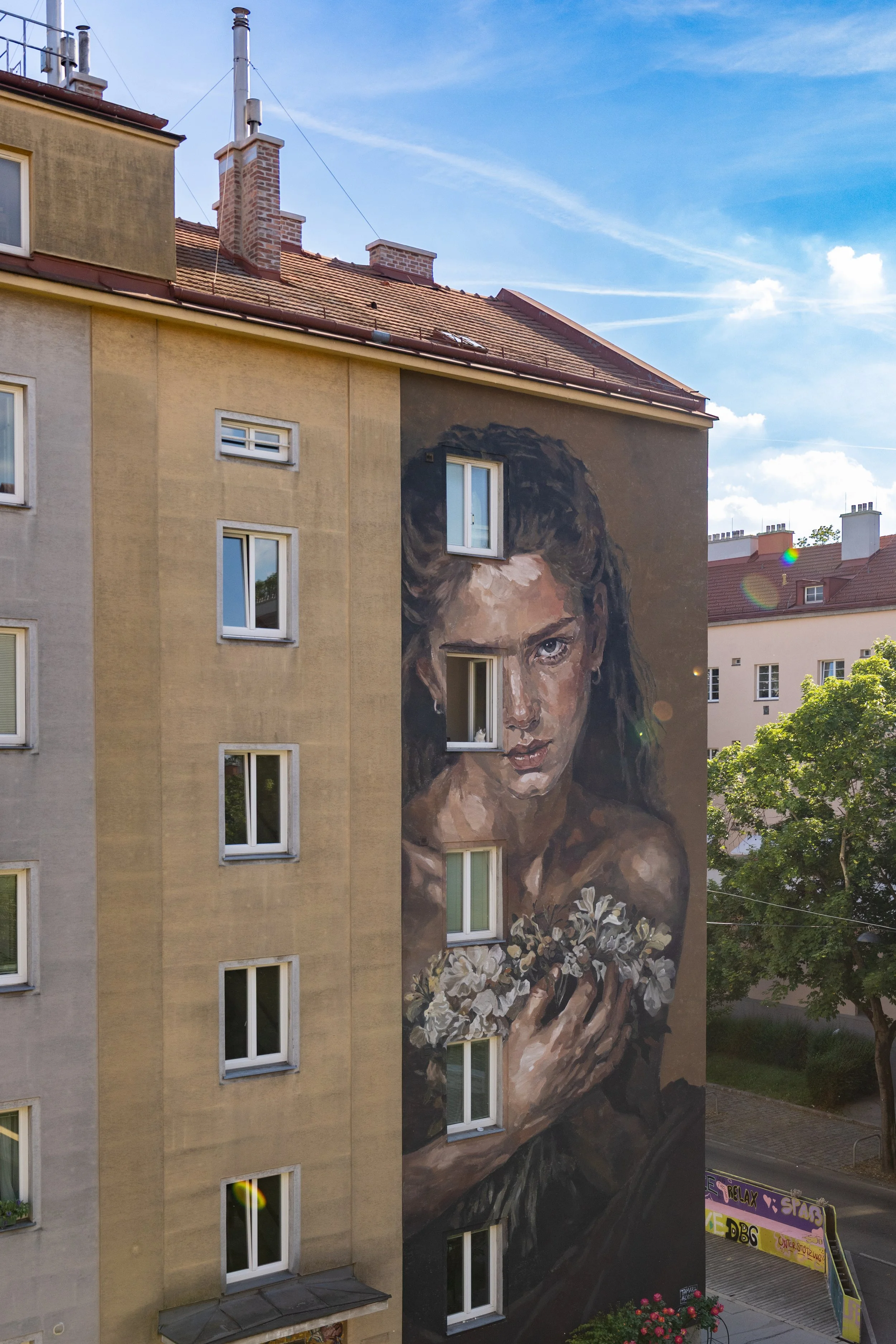
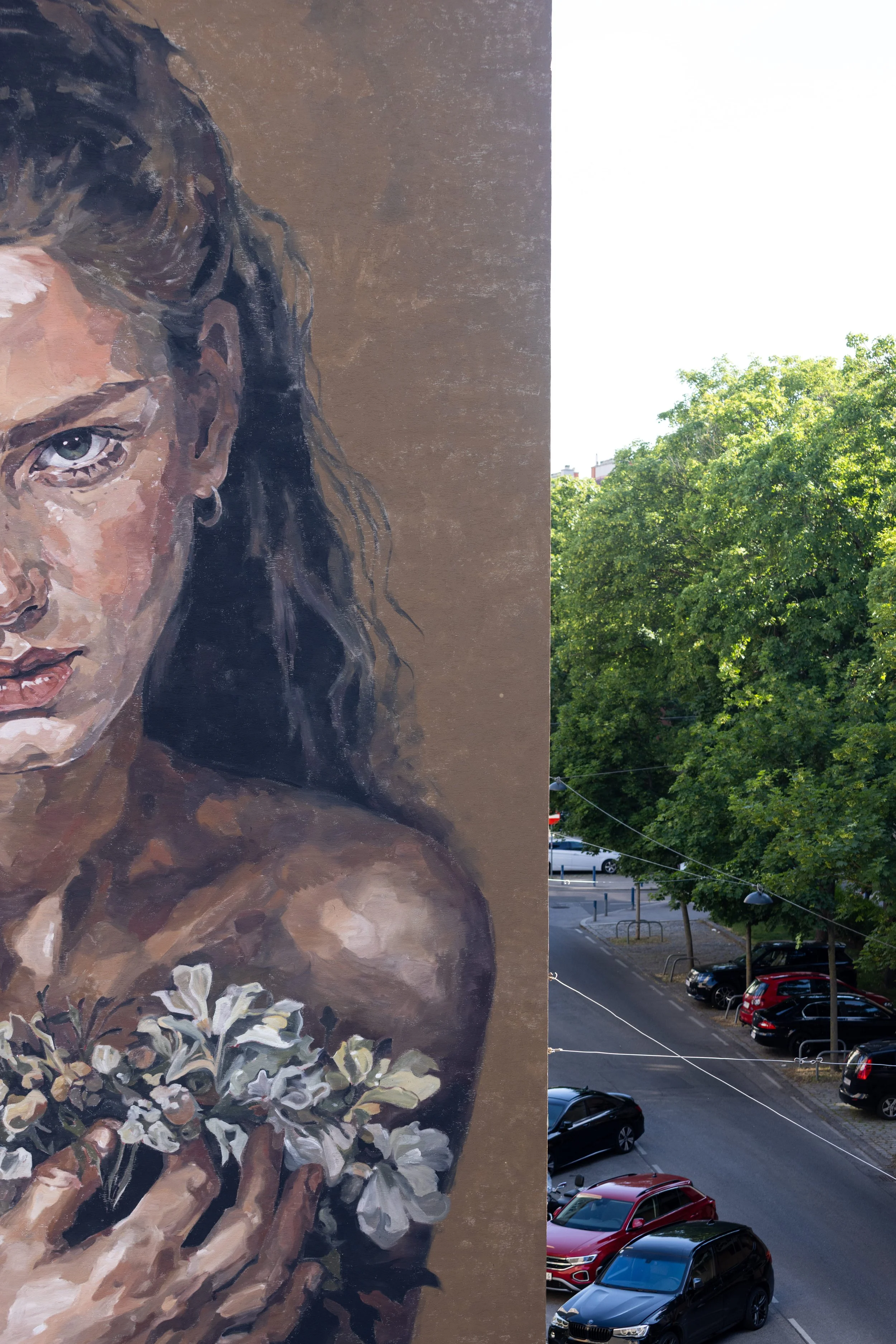
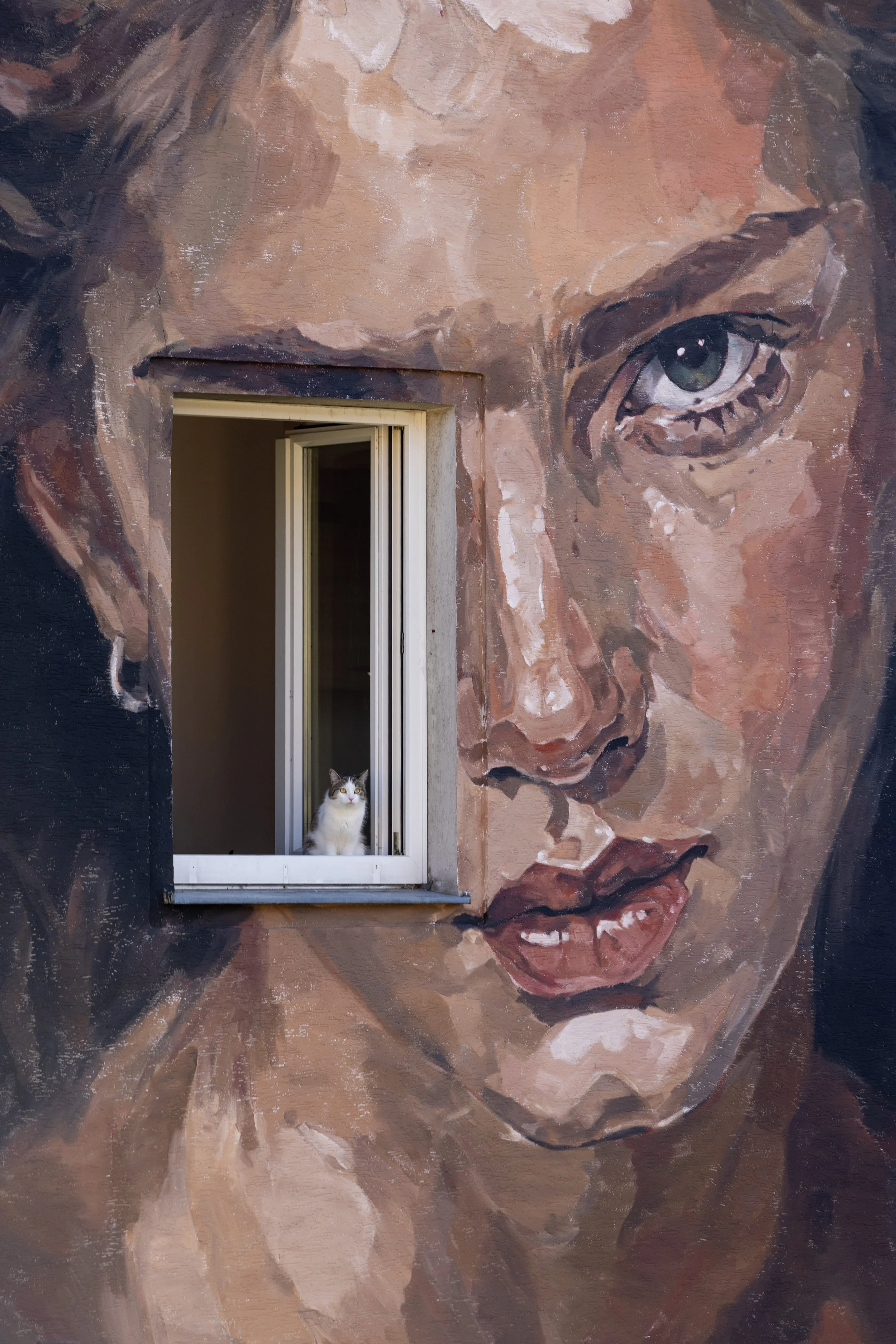
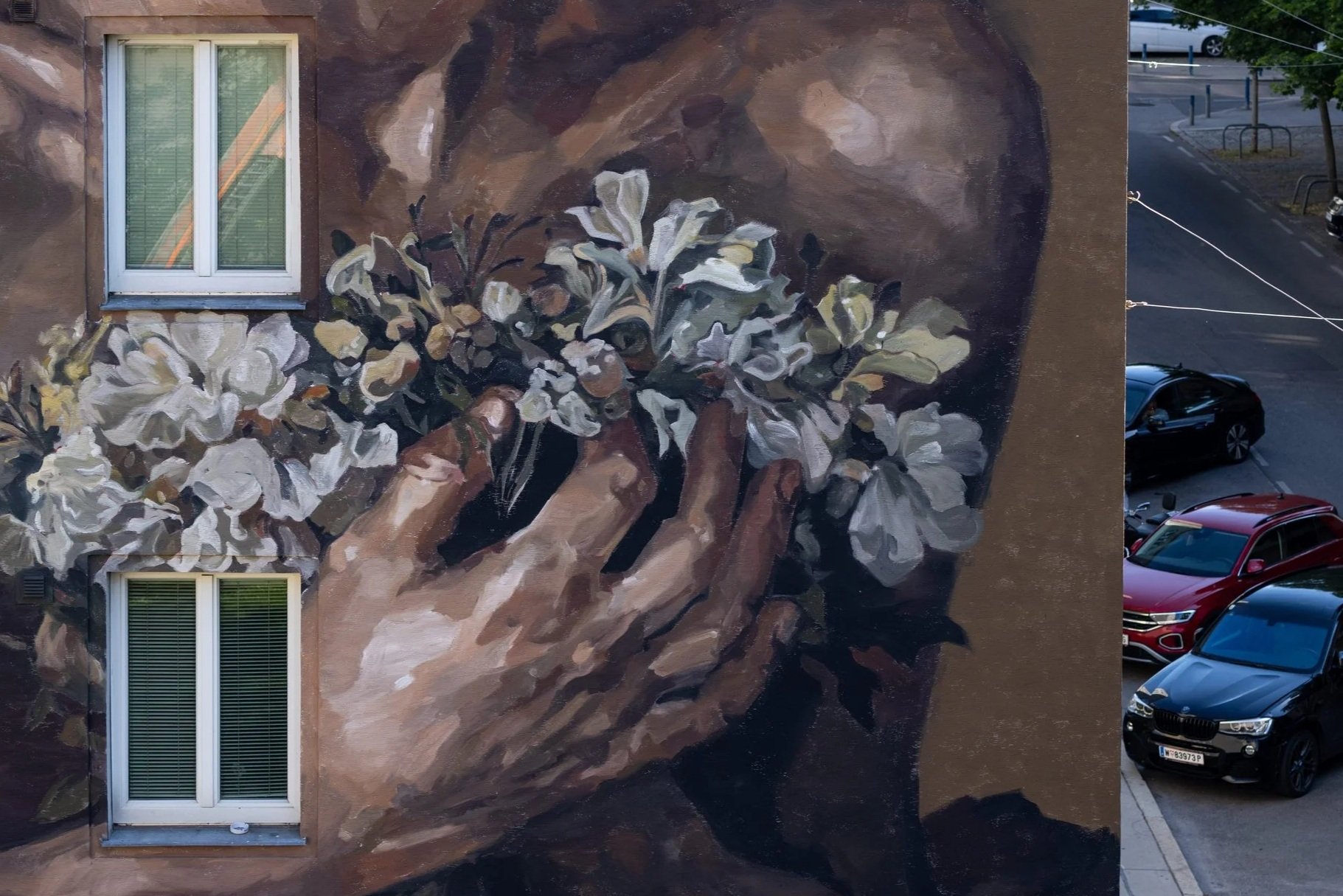
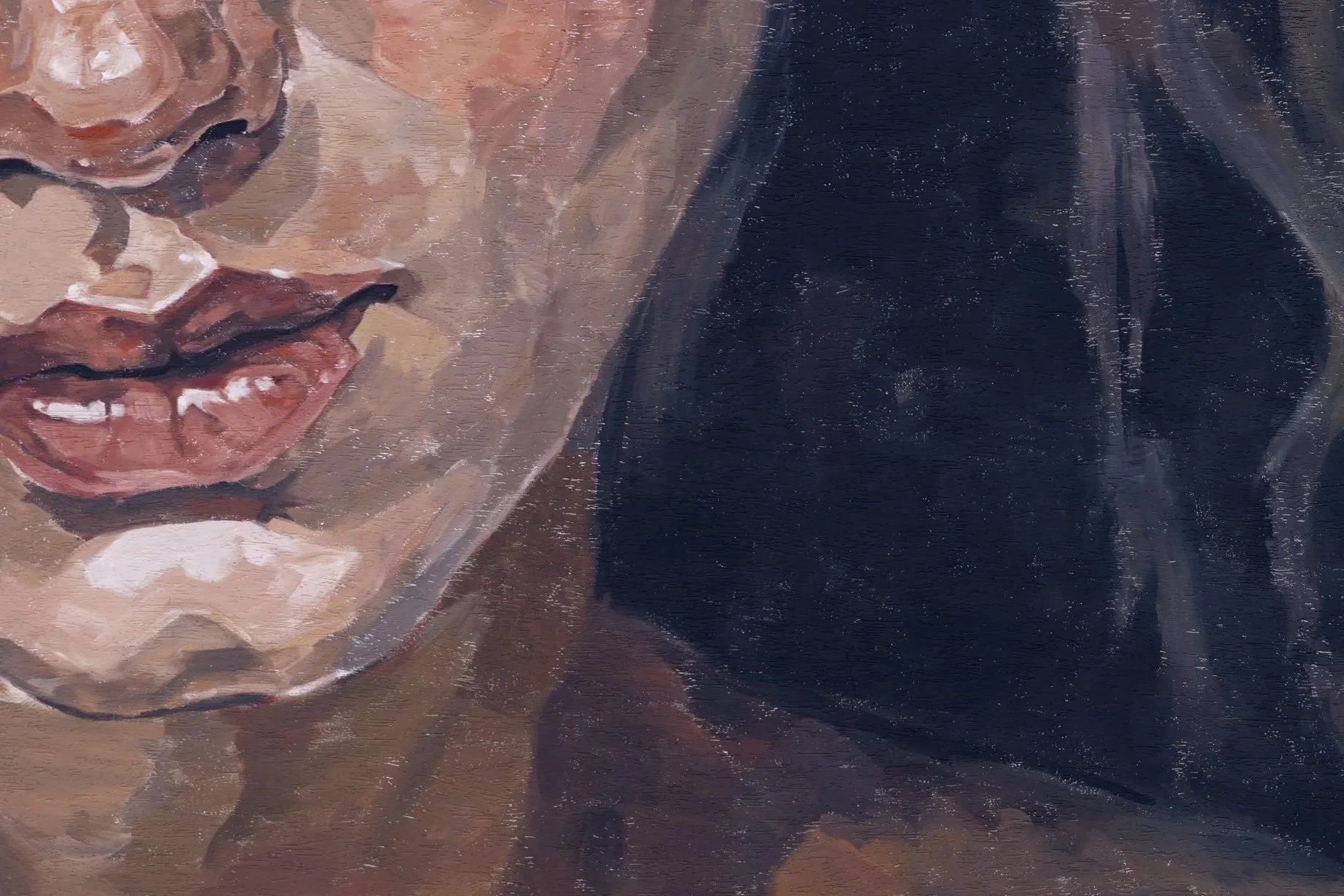
Wall title: Time to flower is now
This mural reflects on equality through the dignity and autonomy of the human body. A woman holds a cluster of wild flowers against her chest: fragile and persistent forms of life that grow freely despite the structures that surround them. In her gesture there is a quiet insistence on care, dignity and presence.
The exposed female body is not presented as an object but as a space of autonomy and self-determination: not offered, not consumed, but inhabited. A reminder that equality begins with the recognition of the body as sovereign ground. Within the rigid architecture of the city, these wild forms speak of a shared condition: different lives, different shapes, yet rooted in the same fragile freedom. They remind us that equality does not erase difference, but begins with the recognition of dignity in every body and every life.
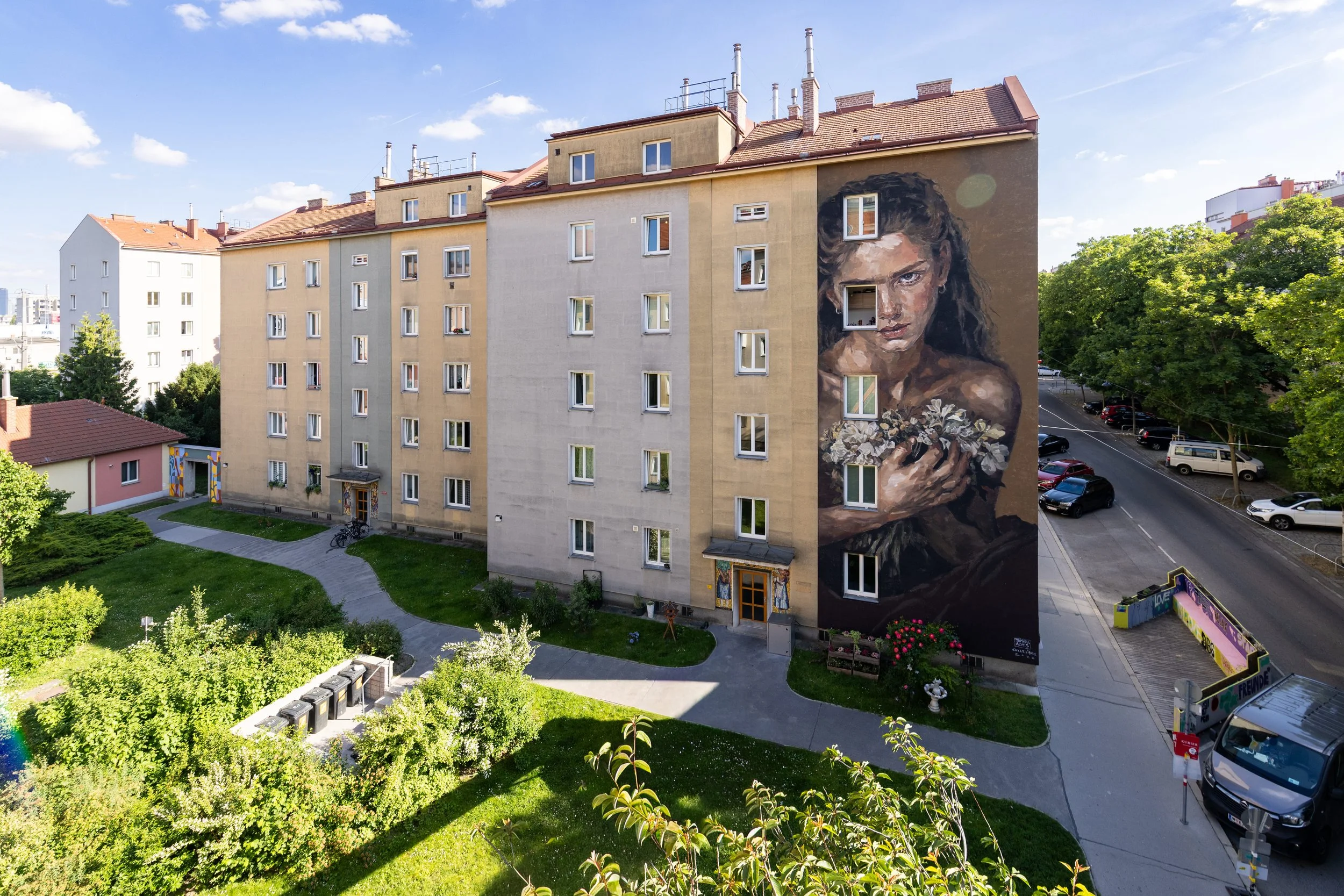
Powered with colors by Murexin
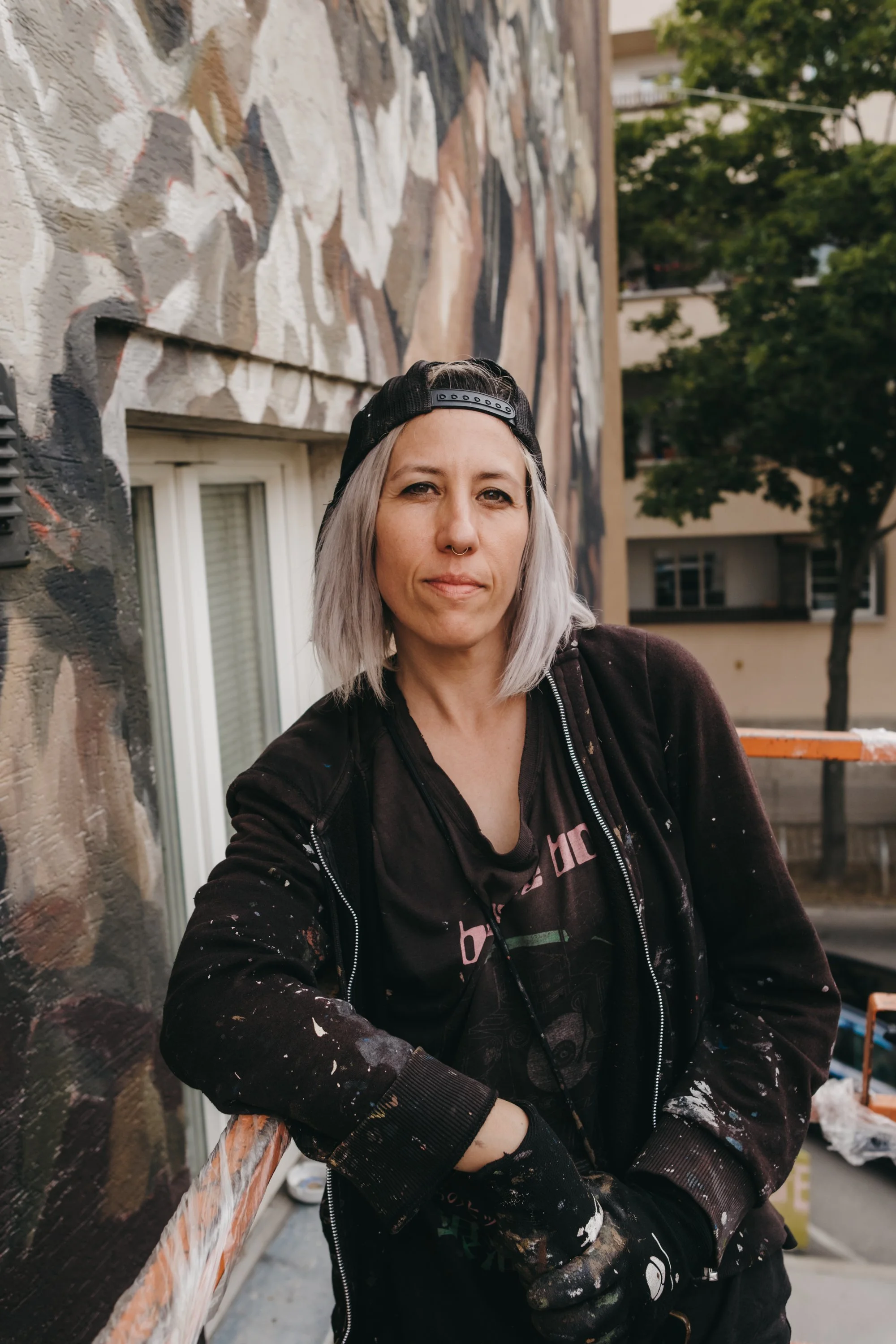
Tamara Alves
(portugal)
Tamara Alves (b. 1983) is a Portuguese visual artist and illustrator, currently based in Lisbon. Has a degree in Arts (ESAD-IPL) and a master in Contemporary Artistic Practices (FBAUP) where her subject of research was “Public Activism in Urban Context”. She has always been interested in a kind of work which is inserted in the world, fascinated with the streets aesthetics and urban context, in order to present her works of art in the street or in public spaces.
Tamara Alves has been weaving a narrative that celebrates in a raw, poetic way the primeval vitality of strong sensations, of an animal becoming, of brute passion, as opposed to rational deliberation.
Based on the idea that our instincts are what defines us, the artist invokes a universe of (female) human and animal figures in interaction with the natural landscape and objects imbued with a strong symbolic charge that invite us to embrace feelings as a wild and untamed driving force. A universe where love, always love (which is wound, pain, tears, but not less pleasure, joy, ecstasy), can be the fruit of an impact, an accident, growing within us like a wild flower.
Tamara on InstagramSupported by: