street art in montreal
Montreal: A City Where Street Art Shapes the Urban Landscape
An essay by Jakob Kattner
An interview with Elisabeth-Ann Doyle, Co-Founder of MU MTL
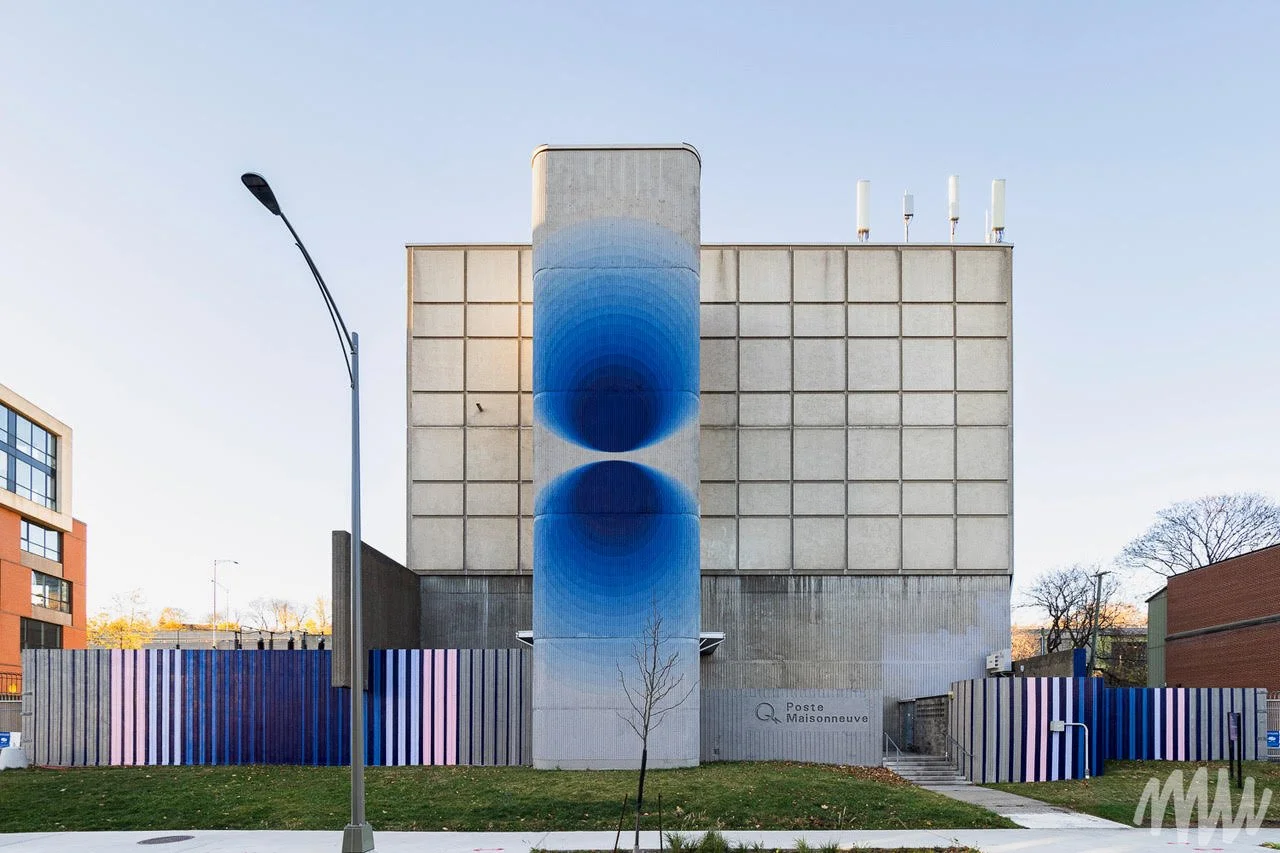
ARTIST: CYNDIE BELHUMEUR
The first thing you notice about Montreal is not its skyline. It is the walls.
From the historic waterfront along the Saint Lawrence River to the bustling Boulevard Saint-Laurent, the city reveals itself through colour. Towering murals rise above brick facades, hidden alleyways are filled with tags and throw-ups, while carefully curated works by internationally acclaimed artists coexist with spontaneous expressions of graffiti culture. In Montreal, street art is not confined to a few designated districts—it has become part of the city's visual identity.
Few cities in North America have embraced urban art as wholeheartedly as Montreal. What began with grassroots graffiti movements in the 1990s has evolved into a sophisticated ecosystem where artists, local communities, cultural institutions, and public authorities work together to transform public space into an open-air gallery.
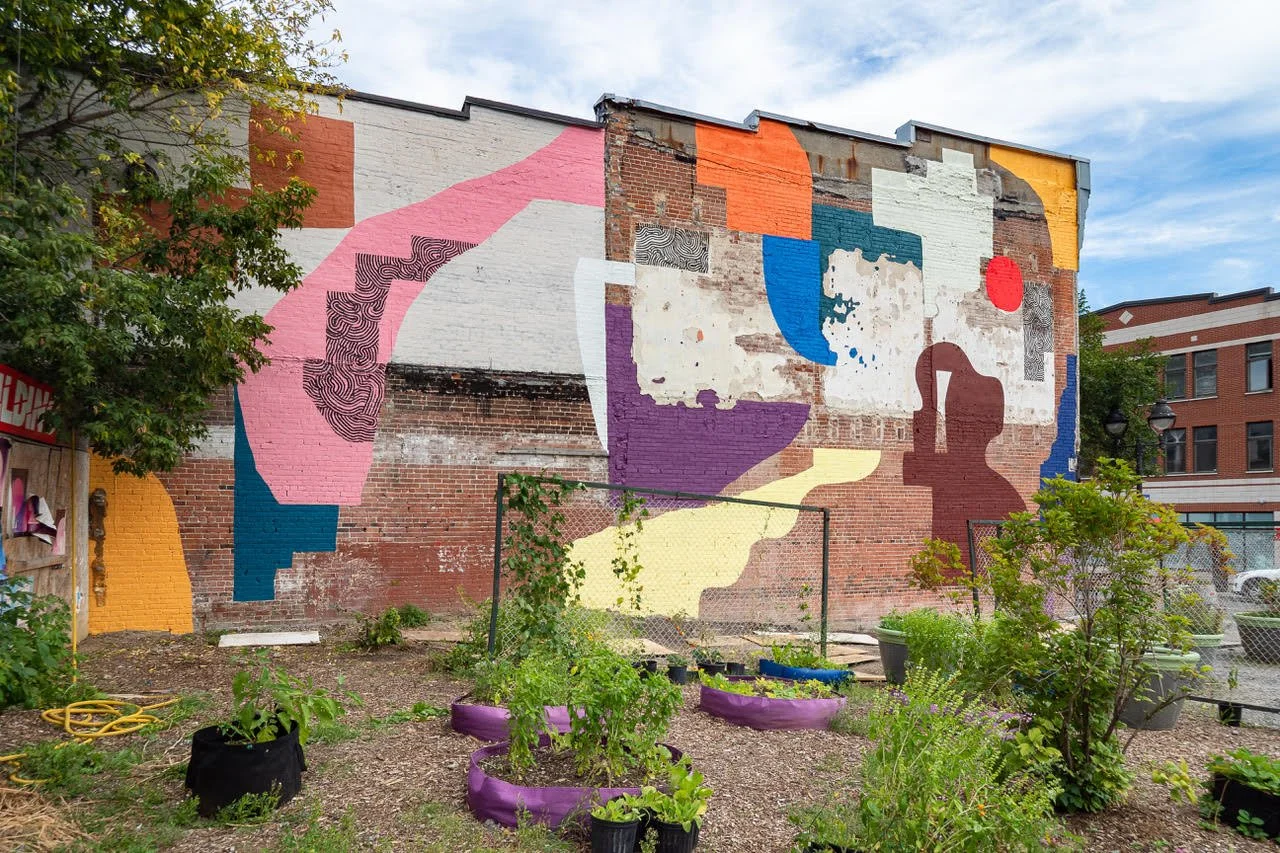
ARTIST : MSHL
History
The foundations were laid in the mid-1990s with Under Pressure, the world's longest-running graffiti festival, which celebrated its 30th anniversary in 2025. At a time when graffiti was still largely viewed as vandalism, the festival offered writers a platform to paint legally, exchange ideas and build an artistic community that continues to thrive today.
A new chapter began in 2012 with the launch of the MURAL Festival. Over the past decade, the festival has produced more than eighty large-scale murals while transforming street art into a city-wide celebration. Every summer, Boulevard Saint-Laurent turns into a vibrant cultural corridor filled with murals, live music, food vendors, installations and thousands of visitors. Street art here is not simply displayed—it is experienced collectively.
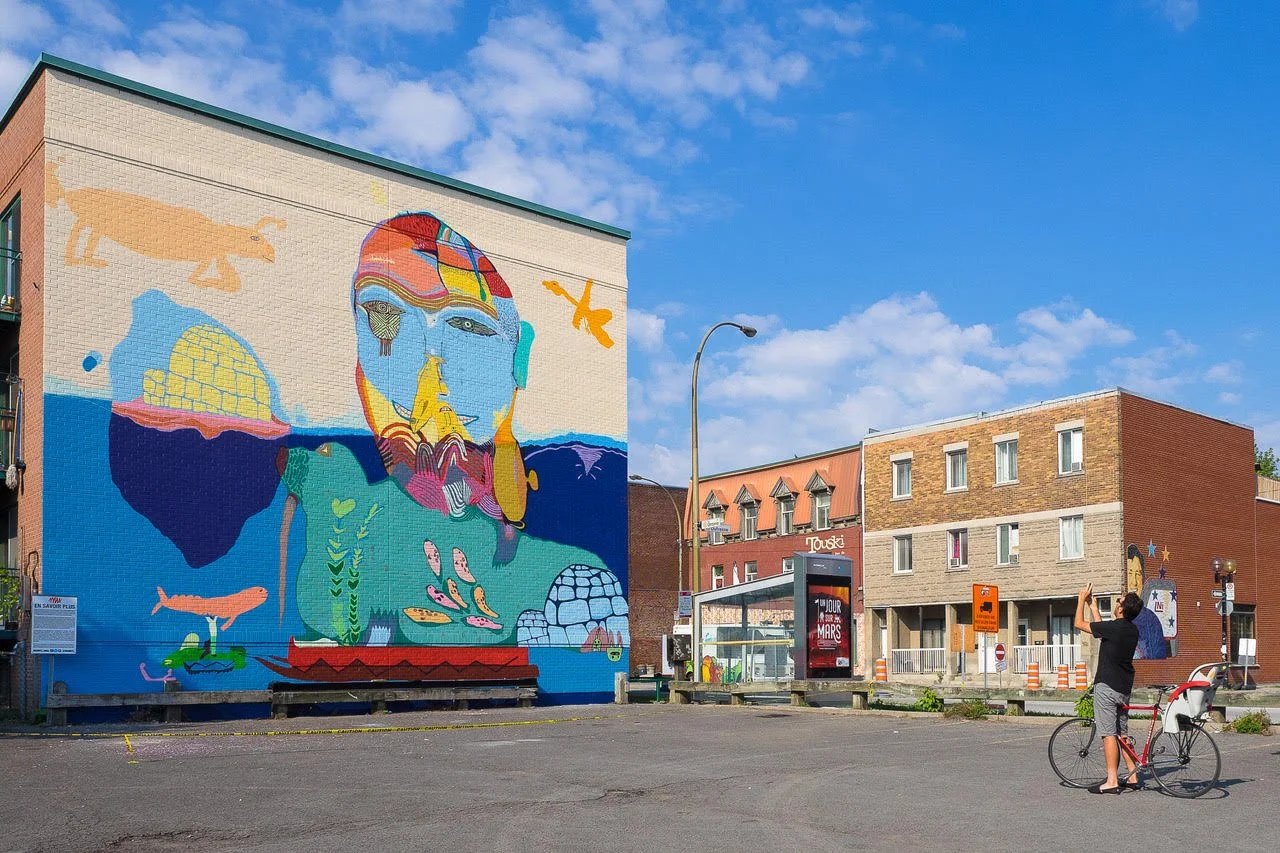
ARTISTS : EMBASSY OF IMAGINATION
Yet Montreal's mural culture extends far beyond festival season.
For more than twenty years, the non-profit organisation MU has quietly reshaped neighbourhoods across the city by commissioning permanent public artworks throughout the year. Their ambition is both simple and profound: to create an open-air museum that is accessible to everyone, regardless of age, income or background. Perhaps no mural illustrates this vision better than the monumental portrait of Leonard Cohen by Gene Pendon and El Mac. Visible from blocks away, it has become one of Montreal's most recognisable landmarks—a work that feels inseparable from the city itself.
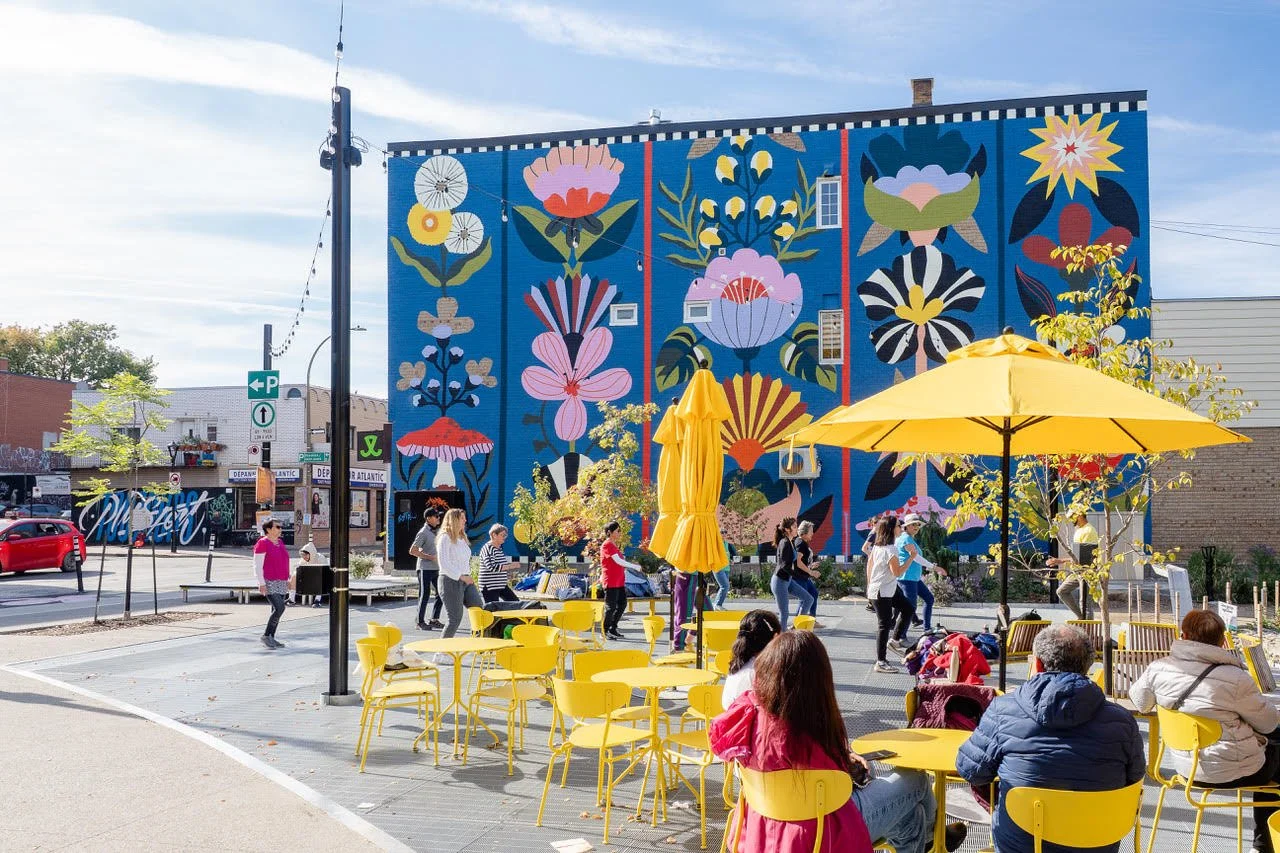
ARTIST : MC MARQUIS
Unlike festival-driven projects, MU develops each mural through extensive dialogue with local residents, schools, neighbourhood organisations and property owners to understand the history, aspirations, and identity of a place. Every project begins by listening before a single brushstroke is made.
"We see murals as much more than works of art," — explains Elizabeth-Ann Doyle, founder and executive director of MU. — "They are tools for social connection, civic participation, and neighbourhood transformation."
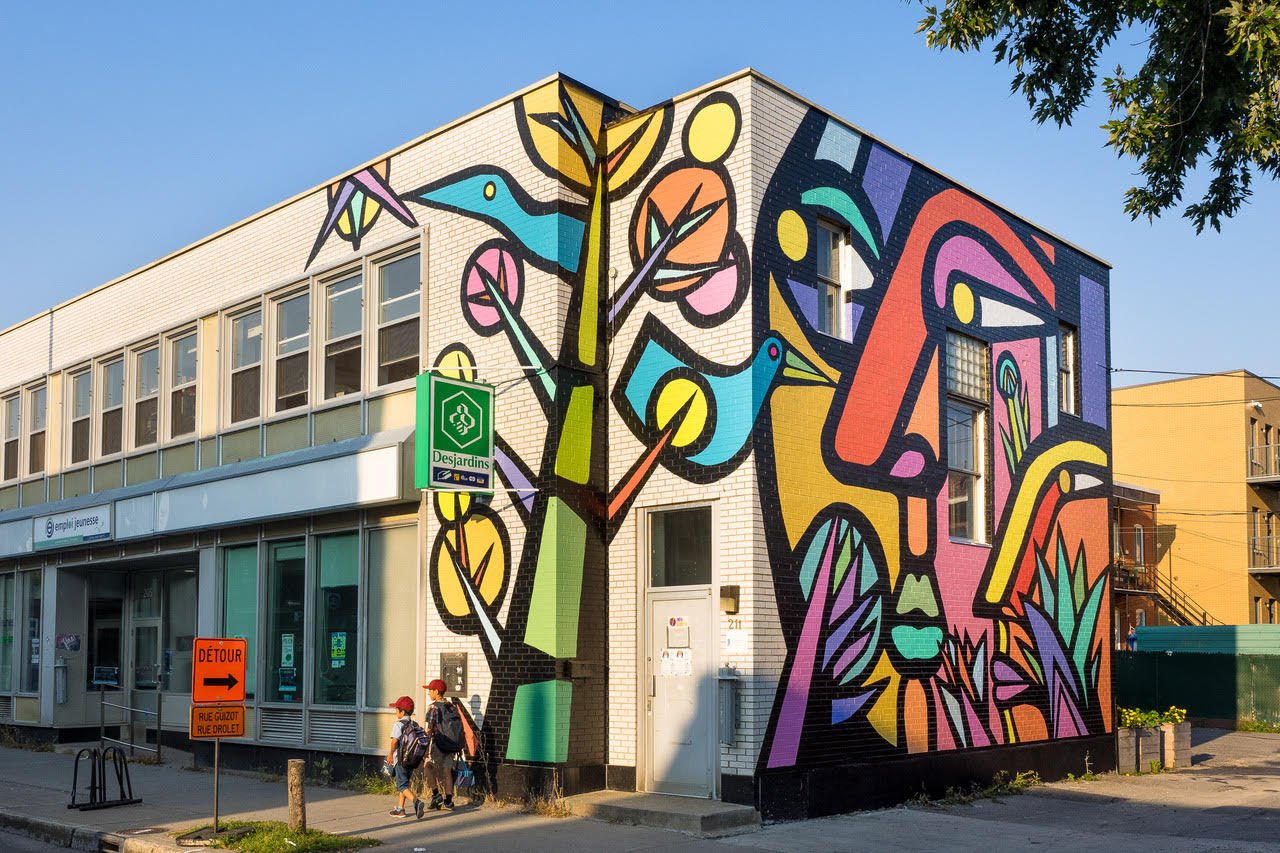
ARTIST : MONO GONZALEZ
The key role of public participation
This philosophy distinguishes Montreal's approach from many other cities. While the finished artwork is highly visible, the collaborative process behind its creation is considered equally important. Murals become catalysts for civic pride, inspire young people, strengthen neighbourhood identities and encourage residents to rediscover places they may have overlooked for years.
“We identify with a socially engaged form of muralism, a monumental, collective, public, educational transformative public art initiative. We carry this conviction that public art has the power to create meaning, bring people together, and raise awareness to social justice aspirations, cultural participation, and neighbourhood vitality. We often say that while the mural is the visible outcome, the process and relationships built during its creation are equally important.”
Elizabeth-Ann Doyle
Public support has played a decisive role in this transformation. Since 2015, the City of Montreal has operated a dedicated public art programme that commissions several permanent murals every year, recognising street art as an integral component of urban development rather than a temporary cultural initiative.
This sustained investment has allowed both local and international artists to leave their mark on the city. During our walks through Montreal, we encountered striking works by Shepard Fairey, Inti and Add Fuel alongside countless murals by Canadian artists whose names may be less familiar internationally but whose work defines the city's creative character.
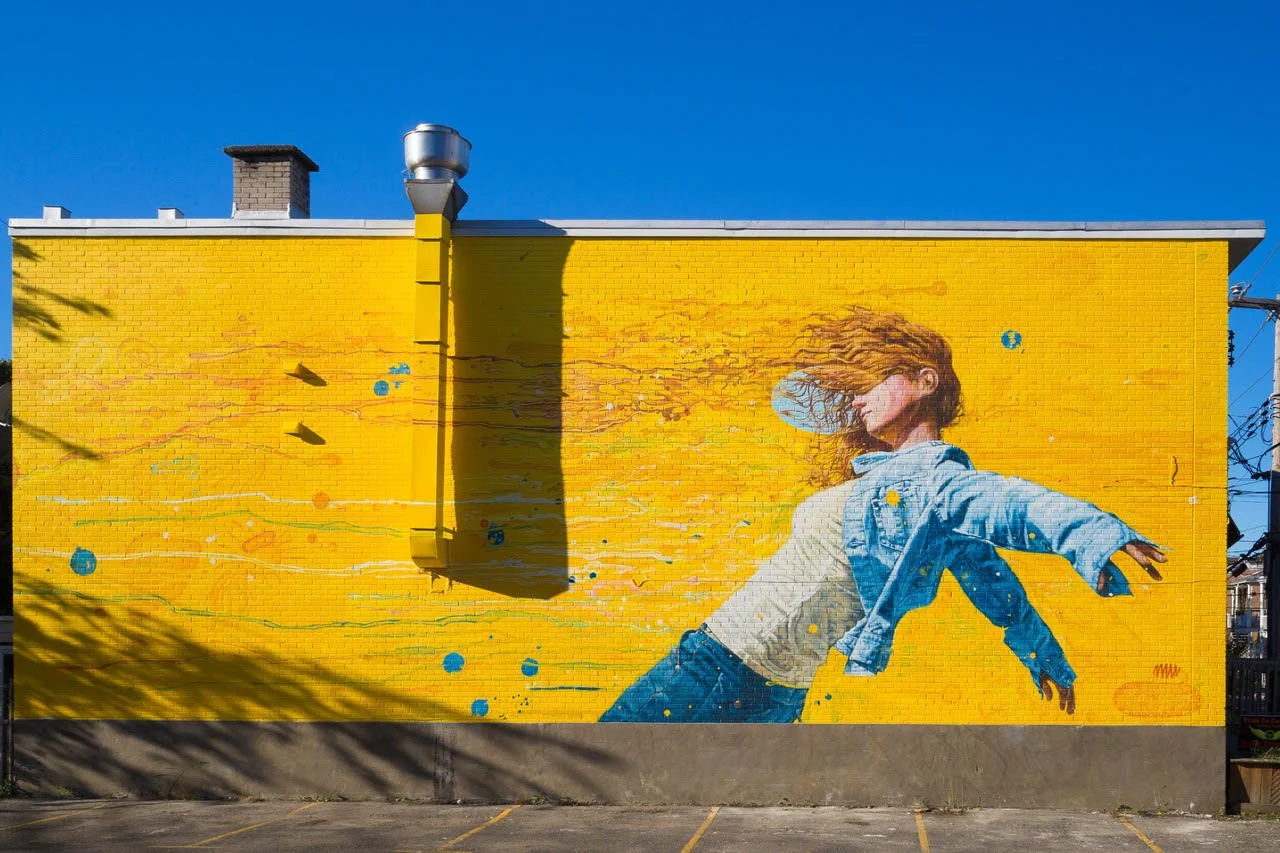
ARTIST : RAFAEL SOTTOLICHIO
Walking through neighbourhoods such as the Quartier des Spectacles, Plateau Mont-Royal, Mile End, Ville-Marie or Little Burgundy quickly becomes an exercise in slowing down. Around almost every corner, another mural appears unexpectedly—a hidden portrait, an abstract composition or an enormous façade transformed into a monumental work of art. Of course, no exploration of Boulevard Saint-Laurent would be complete without stopping at Schwartz's Deli for the city's legendary smoked meat sandwich, a culinary institution that has become as iconic as many of the murals surrounding it.
For visitors wishing to discover Montreal independently, the city's public art platform offers an excellent starting point for self-guided walking tours, allowing travellers to explore hundreds of murals scattered across the city at their own pace.
What makes Montreal exceptional is not simply the quality of its murals. It is the political and cultural commitment behind them. Here, street art is not treated as decoration or an occasional festival attraction. It is recognised as public infrastructure—an essential element of how neighbourhoods tell their stories, strengthen communities and shape the identity of the city itself.
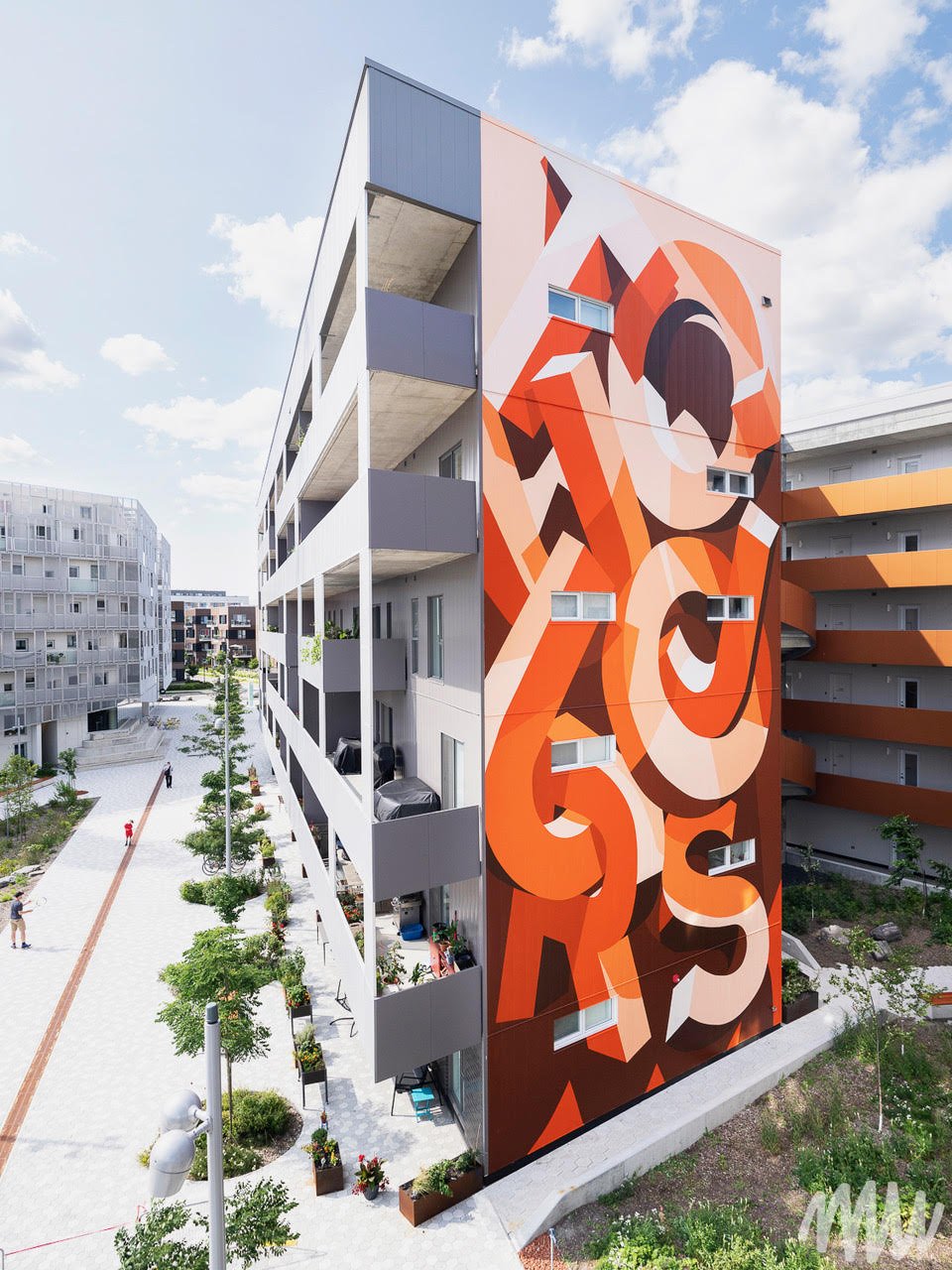
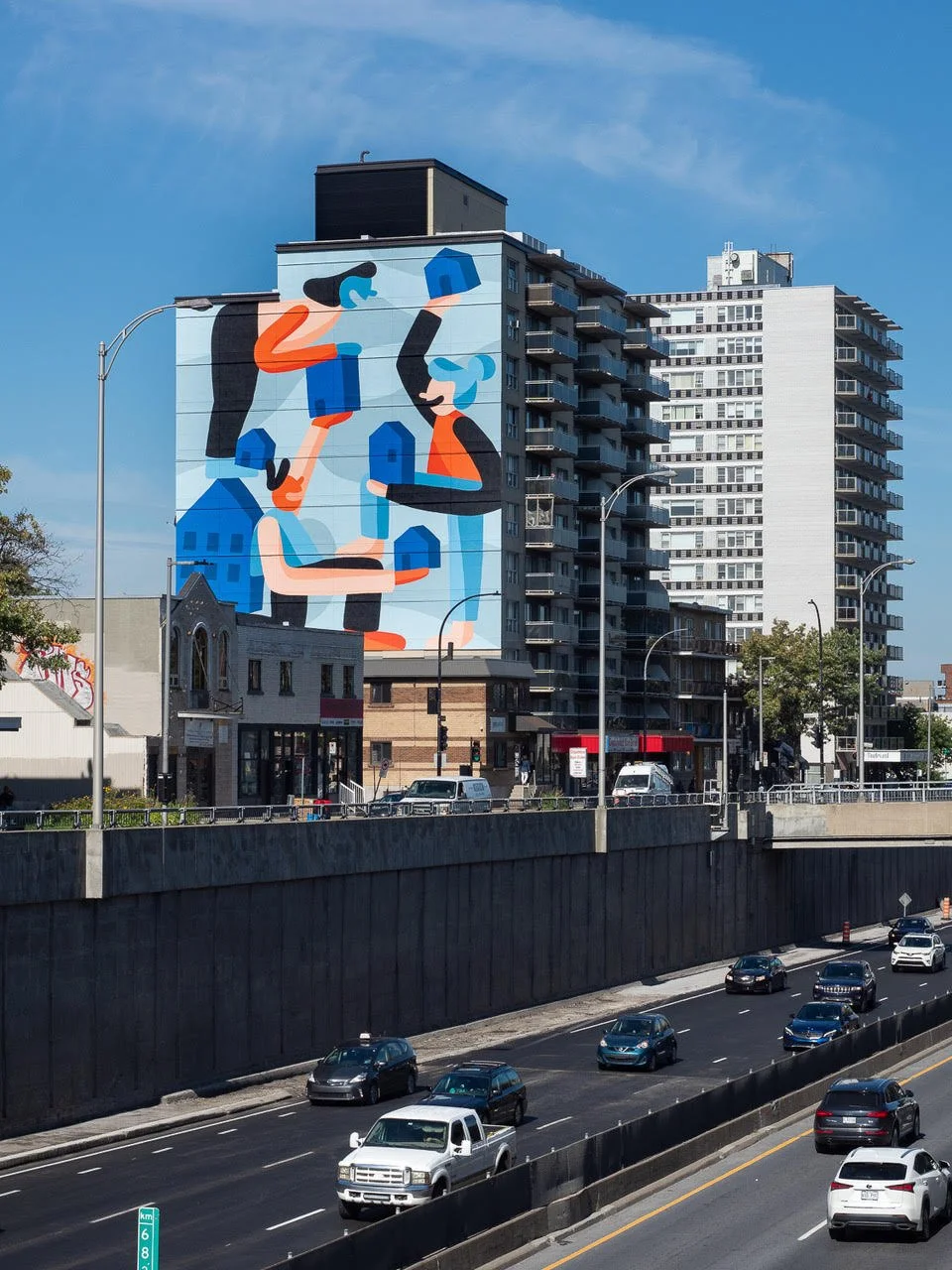
ARTISTS : BEN JONHSON (left), CÉCILE GARIÉPY (right)
For European cities searching for new models of cultural development, Montreal offers an inspiring example of what becomes possible when public institutions, artists and communities invest in the streets together.
One thing quickly becomes clear: in Montreal, you never really have to search for street art.
It simply finds you.
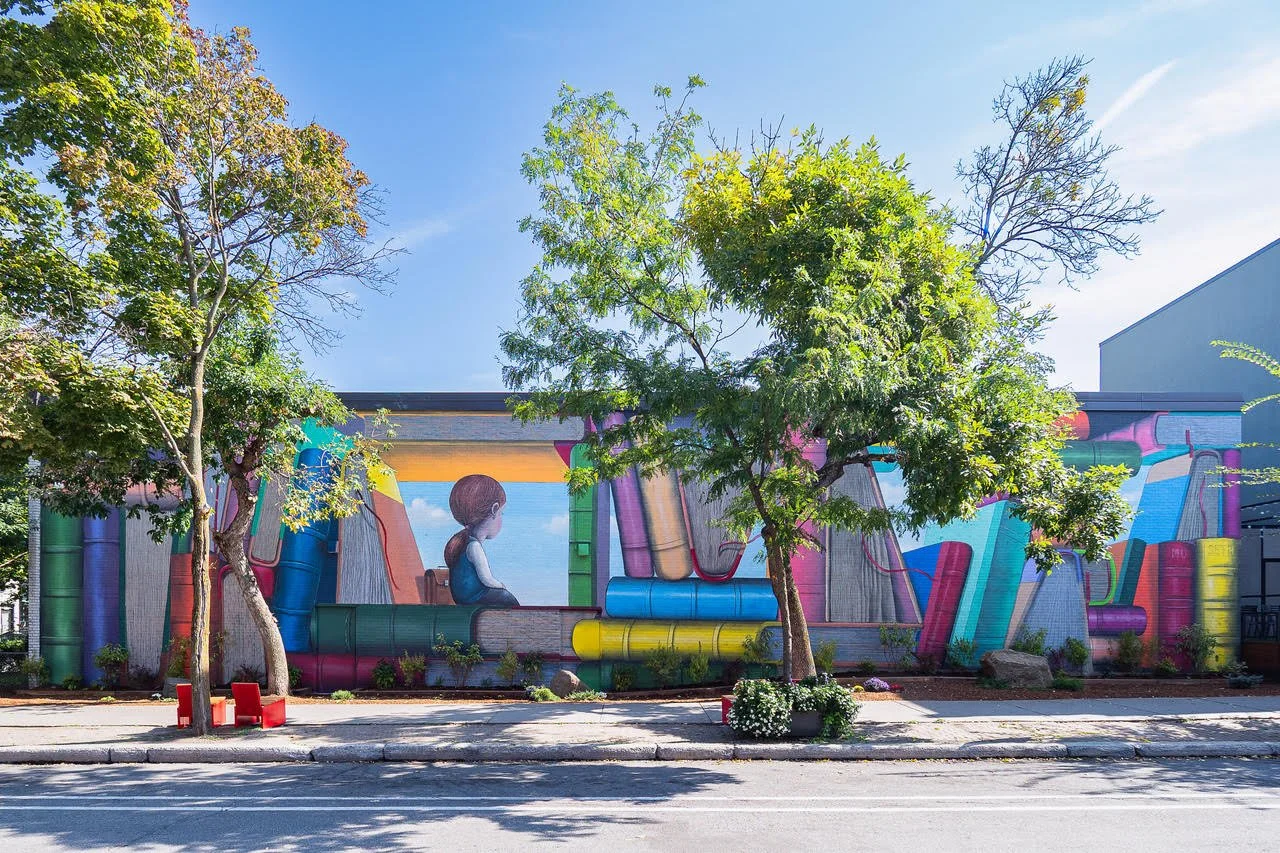
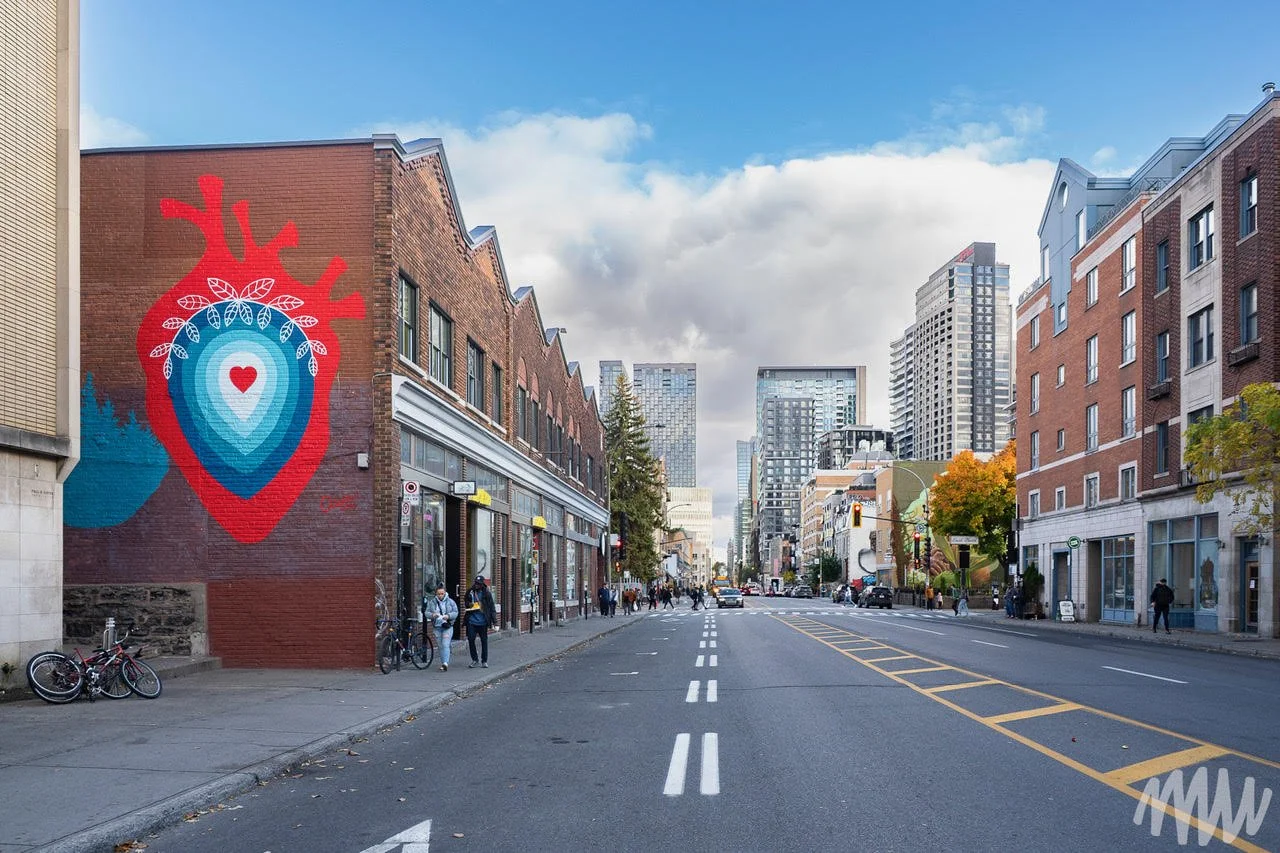
ARTISTS : SETH (right), ERUOMA AWASHISH (left)